The year modern architecture went public
In 1927 the Deutscher Werkbund, an association of architects and designers, staged an exhibition on a hillside in northern Stuttgart. Seventeen architects were each handed a plot and told to build housing for the modern age. Among them: Le Corbusier, Ludwig Mies van der Rohe, Walter Gropius, Hans Scharoun and Peter Behrens. Twenty-one buildings went up.
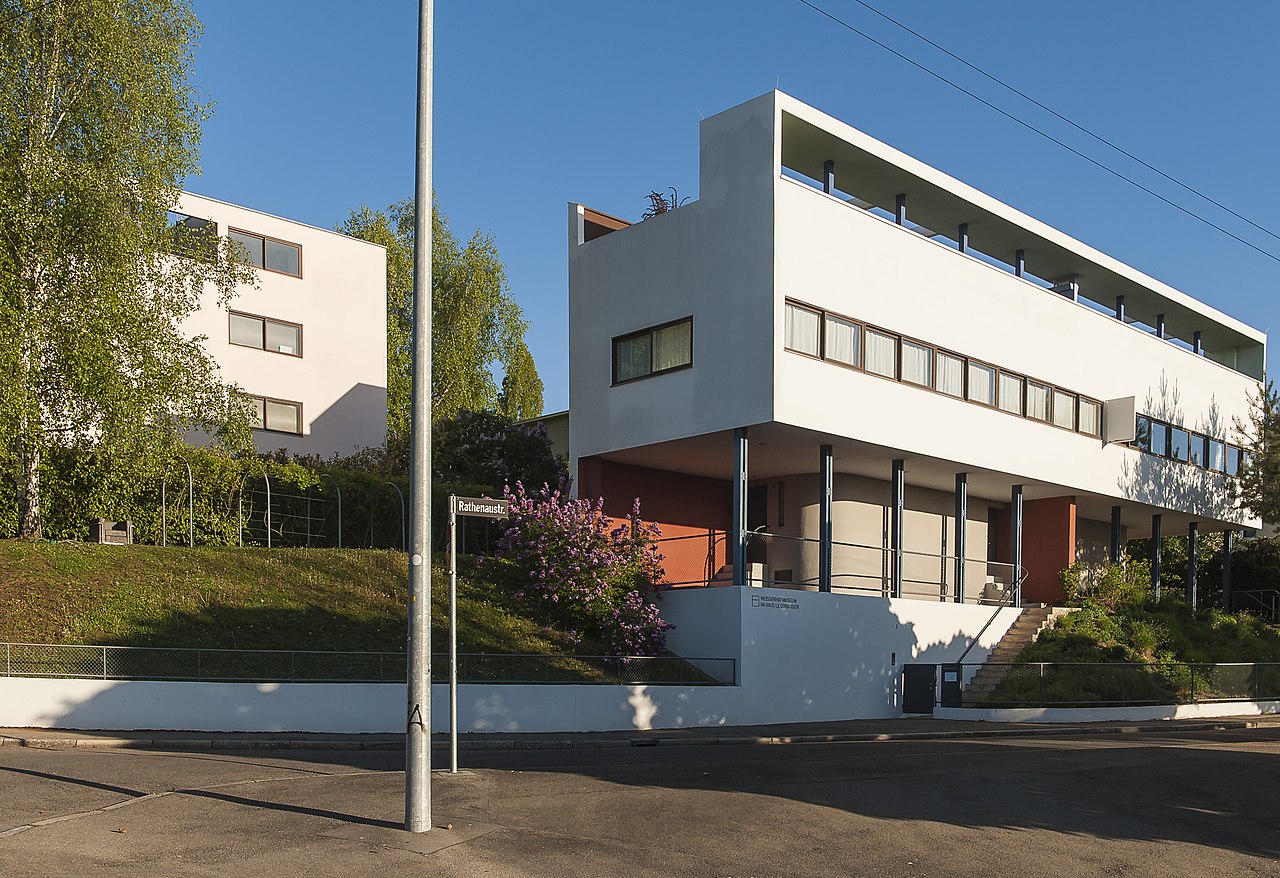
What they produced together became the most compact statement of what modernism was going to look like: flat roofs, white walls, ribbon windows, open plans, no ornament. For an American visitor the vocabulary is instantly familiar, because this is the language that later crossed the Atlantic and turned into everything from mid-century houses to corporate glass towers. The Weissenhofsiedlung is where the argument was first laid out as a complete neighborhood rather than a single building.
The estate was attacked as un-German under the Nazi regime and damaged in the war, so not all twenty-one houses survive. Enough remains to read the original intent.
UNESCO status and the museum
In 2016 UNESCO added the two Le Corbusier houses here to a transnational World Heritage listing covering his work across seven countries. It is the reason Stuttgart appears on World Heritage maps at all, and it is a rare case where the heritage site is a pair of ordinary-looking small houses rather than a cathedral.
The Weissenhofmuseum occupies one of those Le Corbusier buildings and explains both the 1927 exhibition and the estate's later history. Seeing the interior is the point: the plans are what the arguments of 1927 were actually about, and photographs of the exteriors do not convey them.
Visiting
The address is Rathenaustraße 1, 70191 Stuttgart, in Stuttgart-Nord, on high ground above the city center. Allow one to two hours, which covers the museum and a slow walk around the surviving houses. Most of the estate is still lived in, so you are looking at private homes from the street.
Hours and admission for the museum are published by the operator and change seasonally; check the official site before making the trip out. The streets themselves are public and can be walked at any time.