The double helix, and why it matters
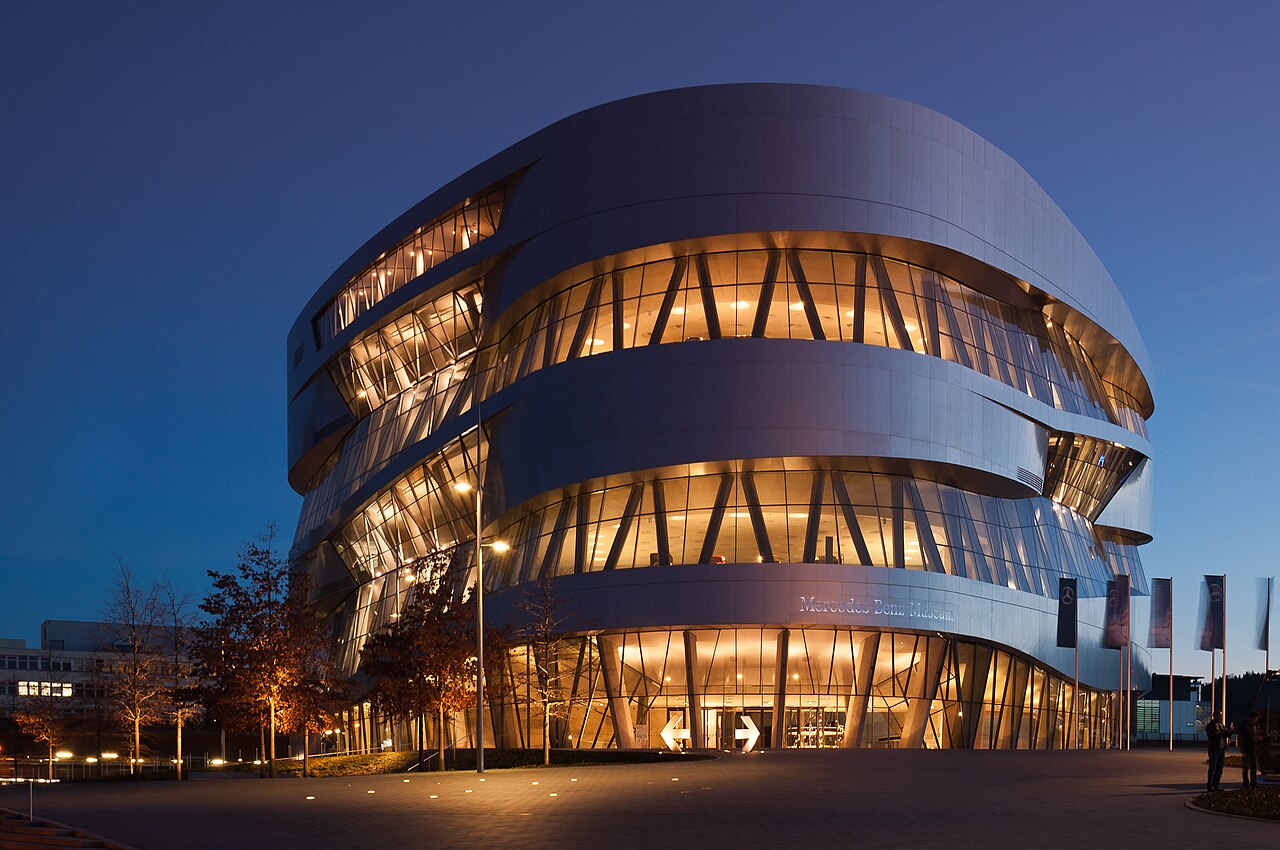
Most car museums are a warehouse with good lighting. This one is a piece of architecture in its own right. The Dutch firm UNStudio finished it in 2006 around a single idea borrowed from biology: two ramps that spiral upward around a central atrium and cross each other without ever merging, the way the two strands of a DNA molecule do. Nine levels stack up inside that shape.
The practical effect is that the building has no dead ends and no back-tracking. You ride up first and then come down along a continuous slope, and at each crossing point you can switch from one spiral to the other. That is the reason visitors describe the place as easy to walk even though the route covers a lot of ground: there are no stairs to fight and no wrong turns to correct.
It is also why the building photographs the way it does. The exterior reads as a solid, slightly twisted volume with almost no visible windows, while the inside is all curve, daylight and long sightlines down through the atrium. If you only have an hour in Untertürkheim and no interest in cars whatsoever, the architecture alone still justifies the trip.
What is actually on display
The collection runs to 160 vehicles and roughly 1,500 individual exhibits, and it is arranged as a straight chronology of the automobile rather than as a corporate showroom. It opens with the 1886 Daimler motorized carriage, which has a fair claim to being the first automobile anywhere, and closes with the current EQ electric models. In between sit the interwar sedans, the postwar economic-miracle cars, the racing machines and the commercial vehicles.
That span is the argument for coming here rather than to a general transport museum. Stuttgart is where the internal combustion car was commercialized, and the exhibits are the actual objects, not replicas standing in for them. Read the wall texts: the museum is unusually willing to place the company inside German history rather than around it.
Plan on two to three hours. Serious car people routinely spend longer, and families with restless kids will find the descending spiral forgiving, because you can cut a level short and simply keep walking down.
Getting there from downtown Stuttgart
The museum sits at Mercedesstraße 100 in Stuttgart-Untertürkheim, a district on the far side of the Neckar river from the city center, hemmed in by vineyards and by the Mercedes-Benz plant itself. From the middle of town the connection is the U13, one of Stuttgart's Stadtbahn lines. Stuttgart has no classic subway; the Stadtbahn is a light-rail network that runs underground downtown and surfaces once it leaves the valley, so the ride out to Untertürkheim doubles as a look at the Neckar valley.
One thing that surprises American visitors: buy and validate your ticket before boarding. There are no gates and no conductor at the door, and fare inspection is done by roving inspectors. Any VVS regional transit ticket covers the trip.
Coming by car is straightforward too, but Stuttgart sits in the Kessel, the bowl-shaped valley the city is built inside, and the roads in and out of it back up badly at rush hour. Rail is usually the calmer choice.
Pairing it with the Porsche Museum
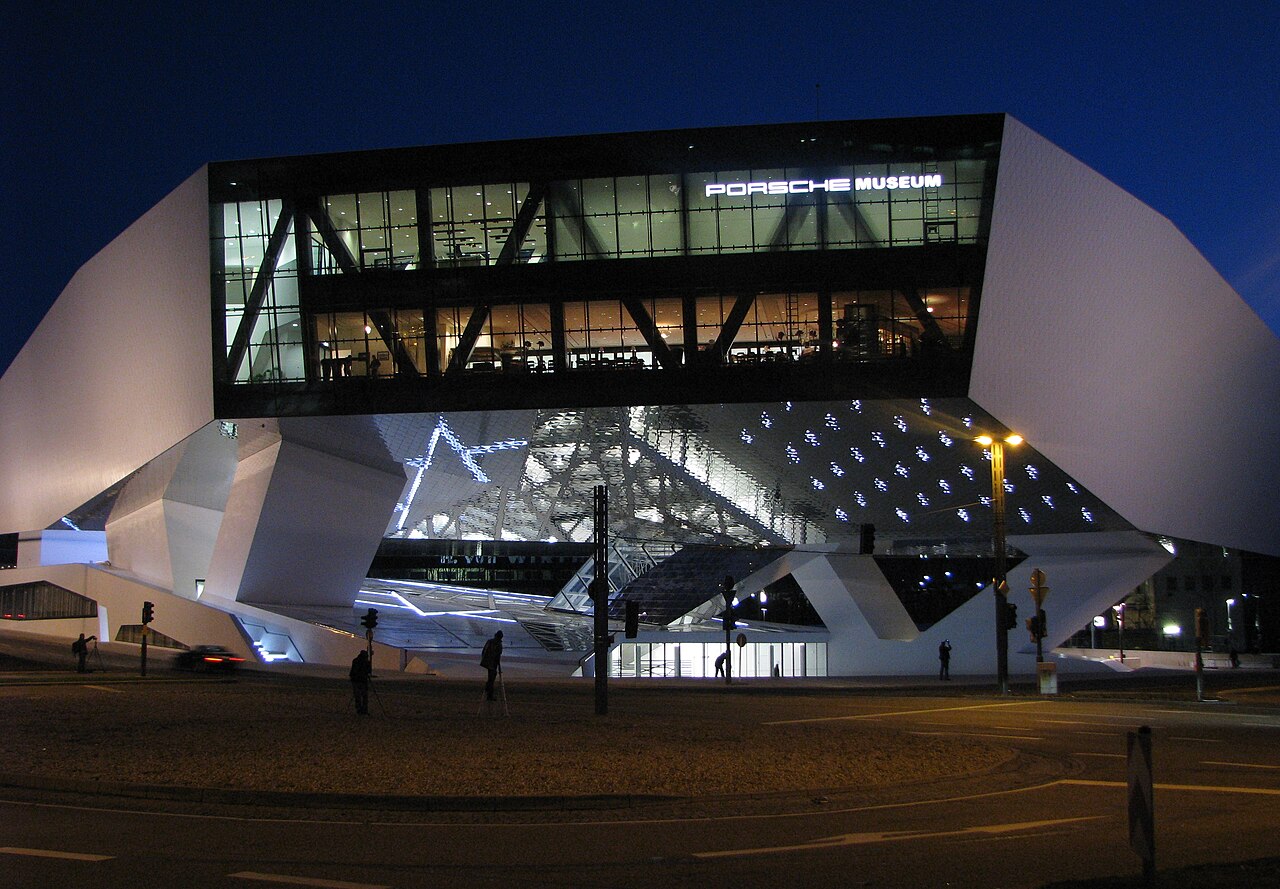
Stuttgart is the only city on earth where you can see the Mercedes-Benz and Porsche collections on the same day, and plenty of visitors come for exactly that. The two sit on opposite sides of the city: Mercedes-Benz southeast in Untertürkheim, Porsche north in Zuffenhausen. Crossing between them is a rail trip through the center, not a quick hop.
The workable version of the double header is one museum in the morning, lunch, the other in the afternoon. Both buildings have food service on site, so you are not obliged to hunt for a restaurant in an industrial district in between.
Opening hours and admission are set by the operator and change, so check the official Mercedes-Benz Museum site before you set out rather than trusting a number printed on a travel page.